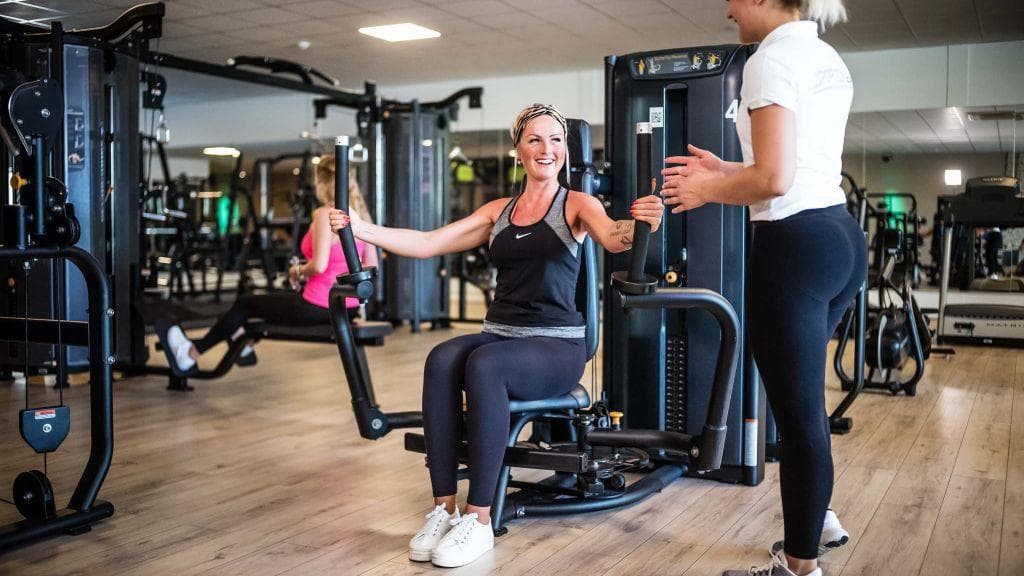
Progressive overload means gradually asking your body to do a little more than it's used to, so it keeps adapting and getting stronger. You can add a rep, a set or a small amount of weight, or improve your control and range. Make one small change at a time, track what you lift, and take an easier week now and then so your body can recover.
What progressive overload actually means
Progressive overload is the simple idea behind every good strength program. Your body adapts to what you regularly ask of it. Lift the same weight the same way forever and, once it's used to that, there's no reason for it to change. Ask for a little more over time and it keeps building strength to cope.
The key word is gradual. This isn't about smashing yourself every session or adding weight no matter what. It's about small, steady steps that add up over months. Think of it like saving: tiny regular deposits beat one big splurge followed by nothing.
Five ways to make an exercise a little harder
Adding weight is the obvious one, but it's not the only lever, and it's often not the best one to pull first. Any of these counts as progress.
- More reps: doing 11 reps with a weight you did 10 times last week.
- More sets: going from 2 sets of an exercise to 3.
- More weight: moving the pin down one plate, or picking up the next dumbbell.
- Better control: slowing the lowering part of each rep, or pausing briefly at the hardest point.
- Better range: going a little deeper on a leg press or squat, as long as it feels comfortable.
A real example, week by week
Say you're doing a chest press with a rep range of 10 to 12. In week one you manage 10, 10 and 9 reps at your chosen weight. Week two, you get 11, 10 and 10. By week three or four you hit 12, 12 and 12 with good form. That's your signal.
Now you move up to the next weight and drop back to around 10 reps per set. Then you build up to 12 again. This method is often called double progression, because you progress the reps first and the weight second, and it suits almost everyone.
Some weeks you won't beat last time, and that's normal. A bad night's sleep, a long shift or a sick kid will all show up in the gym. Matching last week counts as a win. Progress is a trend over months, not a guarantee every session.
How to track your progress
You can't build on last week if you can't remember what you did. Tracking doesn't need an app or a spreadsheet. A small notebook or the notes on your phone works fine. For each exercise, write down the weight or pin setting, the sets and the reps.
It's also worth adding a quick note on how it felt, such as 'easy', 'solid' or 'last set was a grind'. Over a few weeks you'll see a clear pattern, and it takes the guesswork out of deciding whether to go up. Looking back at where you started is also very good for motivation on the flat days.
How to progress safely
Change one thing at a time. If you add weight, don't also add a set that day. Keep jumps small, especially on smaller muscles like shoulders and arms, where even the next dumbbell up can feel like a big leap.
Your form is the gatekeeper. If adding weight means your back arches, you start swinging, or you can't control the lowering, it's too much for now. Stay where you are a little longer. If something hurts rather than just feels like hard work, stop that exercise. Anyone with an injury or health condition should check with their GP or physio before ramping up their training.
When to take a lighter week
A deload is a planned easier week. You keep coming in and doing the same exercises, but drop the weight or the number of sets back noticeably, so your body and joints can catch up on recovery.
Beginners often don't need one for the first couple of months. After that, many people find an easier week every six to eight weeks helps. You might also take one sooner if progress has stalled across several exercises, you're sore all the time, or you're dreading sessions you used to enjoy. You'll usually come back feeling fresher.
Building strength steadily at Foundation
At Foundation, the commercial Life Fitness machines make progressing easy to measure, with weight stacks you can move up a plate at a time and free weights in small steps. Your induction covers how to set up each machine, so you start from a sensible baseline.
With 24/7 access, it's easier to stay consistent, and consistency is what makes overload work. If you'd like someone to plan your progressions and keep an eye on your form, group classes and personal training are there when you want them.
Key takeaways
- Progressive overload means doing a little more over time: more reps, sets, weight or control.
- Use a rep range, build to the top of it, then add weight and start again.
- Track your weights, sets and reps so you always know what to beat.
- Change one thing at a time and let good form decide when you go up.
- Take a lighter week when progress stalls or you're constantly worn out.
General information only, not medical advice. If you have a health condition, injury or joint replacement, check with your GP or physio before starting something new.