Low impact exercise for arthritis means movement that keeps at least one foot on the ground or takes your body weight off your joints, such as walking, cycling, swimming and controlled strength training. Done regularly and built up slowly, it can help ease stiffness, strengthen the muscles that support sore joints and make everyday tasks easier. Start light, stay in a comfortable range and check with your GP or physio first.
Why movement helps sore joints
When joints ache, the natural instinct is to rest them. A little rest during a flare is sensible, but long stretches of inactivity tend to leave joints stiffer and the muscles around them weaker. That's why low impact exercise for arthritis is so widely recommended. It keeps joints moving through their range without the jarring that comes from running or jumping.
Your muscles act like shock absorbers. Stronger thighs take load off sore knees, a stronger backside and core support the hips and lower back, and stronger shoulders make reaching overhead less of a struggle. Building that support is one of the most useful things you can do for joints that complain.
Movement also helps with the stiffness that sets in after sitting still. Many people find their joints feel looser and more comfortable once they've warmed up, which is a good sign the exercise is helping rather than hurting.
Low impact cardio options
Low impact cardio gets your heart and lungs working without pounding your joints. The goal is a pace where you're breathing a bit harder but could still hold a conversation. Ten minutes is a perfectly good place to begin, and you can add a few minutes each week as it starts to feel easy.
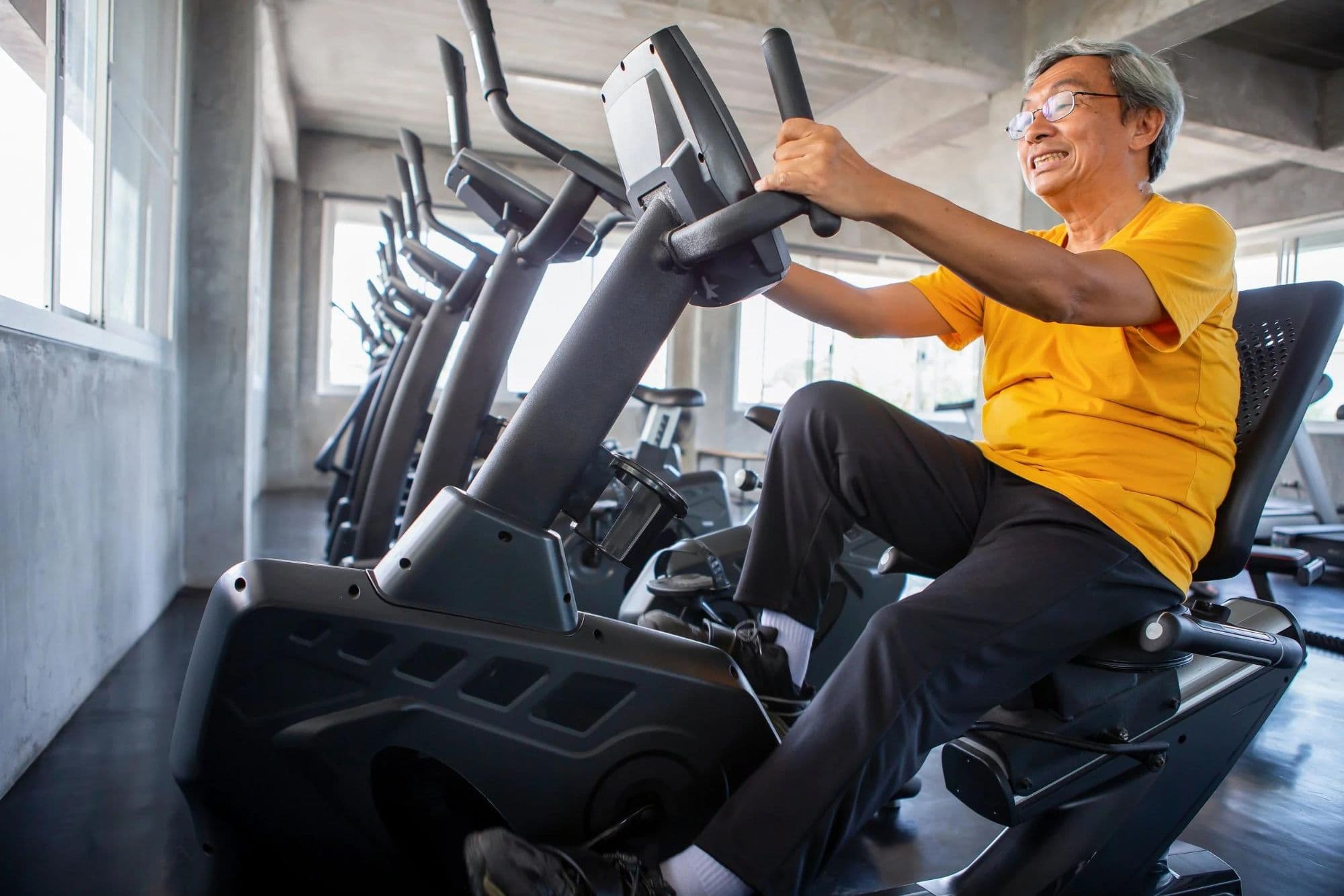
Pick whatever feels kindest on your body. If your knees are the problem, a bike or cross trainer often suits better than a treadmill. If your back or hips are sensitive, a recumbent bike with a seat back can be the most comfortable choice.
- Stationary or recumbent bike: smooth, seated and easy to adjust
- Cross trainer: a walking motion without the impact of each step
- Rowing machine: works legs, back and arms, best with a short lesson first
- Treadmill walking: flat or a gentle incline, holding the rails if you need to
- Swimming or water walking: the water supports your weight
Strength exercises that are kind to your joints
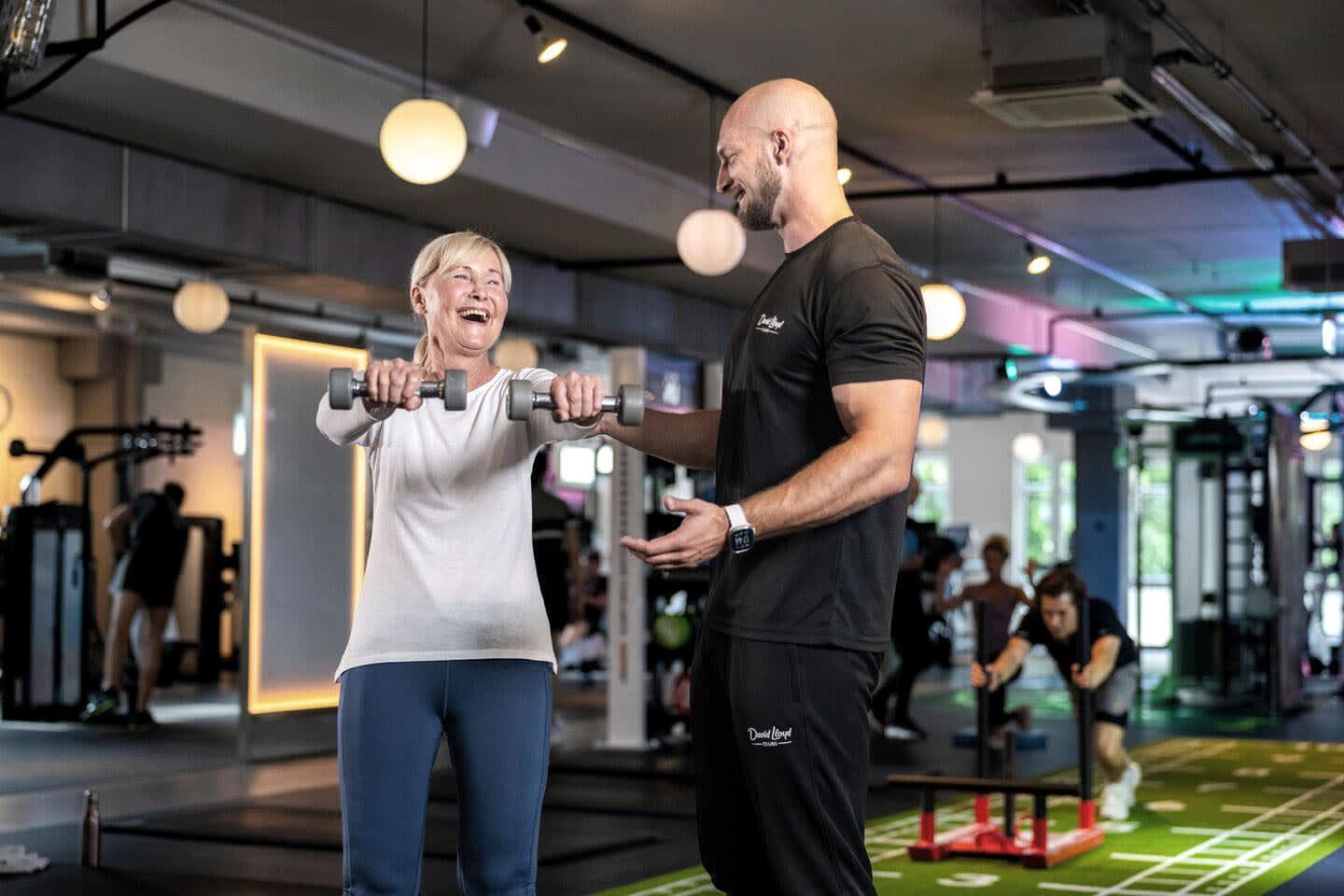
Strength training sounds intimidating, but for arthritis it simply means asking your muscles to work a little harder than usual in a controlled way. Machines are a great starting point because they guide the movement, let you start with a very light weight and keep you supported.
Choose a weight you could lift around 12 to 15 times with good form, and stop a couple of reps short of struggling. Move slowly, breathe out as you push, and stay within a range that feels comfortable. If a movement aggravates a joint, shorten the range or swap it for something similar.
- Leg press, kept to a comfortable depth, for knees and hips
- Seated leg extension and leg curl with a light weight
- Sit to stand from a chair or bench, the most practical exercise there is
- Seated row and chest press machines for the upper body
- Glute bridges on a mat for the hips and lower back
Exercise for knee pain specifically
Knees are one of the most common places people feel arthritis, and the muscles at the front and back of the thigh do much of the work of protecting them. Strengthening those muscles often makes stairs, getting out of the car and kneeling in the garden feel more manageable.
Start with partial ranges. A sit to stand from a higher chair is easier than a low one, and a leg press with a short range is gentler than going all the way down. As your strength improves, you can gradually lower the chair or deepen the movement. If your knee swells or the pain is sharp rather than achy, ease off and get it checked.
How to tell good discomfort from bad
Some mild aching during or after exercise is normal, especially when you're new to it. A useful rule of thumb many physios use: mild discomfort that settles within a day or so is generally fine, while pain that is sharp, keeps building or lingers well into the next day means you've done too much.
If that happens, don't give up. Drop the weight, shorten the range or do fewer sets next time. Progress with arthritis is rarely a straight line, and good days and bad days are part of it. On a bad day, a gentle bike session or a few mobility moves is still a win.
Starting out at a gym like Foundation
A gym can be a comfortable place to do this kind of exercise because the equipment is designed to support you. At Foundation, everything is commercial Life Fitness gear, with seats and pads that adjust to your body and weight stacks that start light. An induction is the best first step, so you're shown how each machine works and how to set it up for sore joints.
There's no rush and nobody watching the clock. With 24/7 access, you can come in at quieter times if you'd rather settle in without a crowd, and simply go at your own pace. Before you start, check with your GP or physio, especially if you've had a joint replacement or recent flare.
Key takeaways
- Gentle, regular movement usually helps arthritis more than long periods of rest.
- Stronger muscles around a joint take pressure off it, so strength work matters as much as cardio.
- Bikes, cross trainers, rowers and machines let you train hard enough without jarring your joints.
- Mild aching that settles within a day is usually fine. Sharp or lingering pain means ease off.
- Check with your GP or physio before starting, then begin light and build slowly.
General information only, not medical advice. If you have a health condition, injury or joint replacement, check with your GP or physio before starting something new.