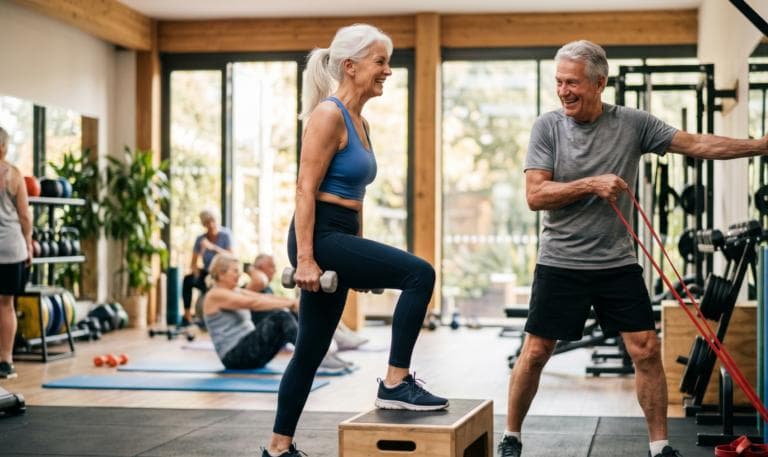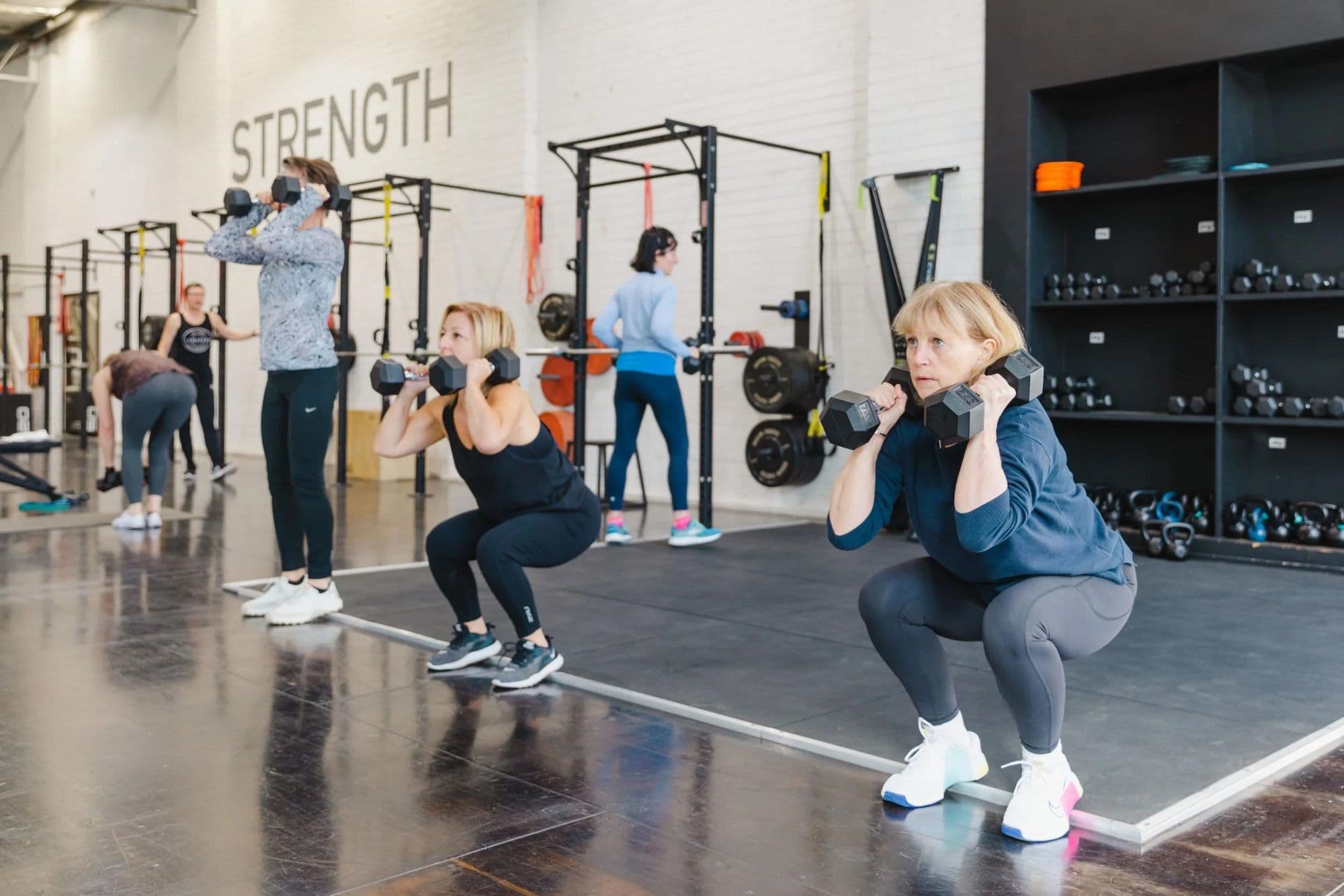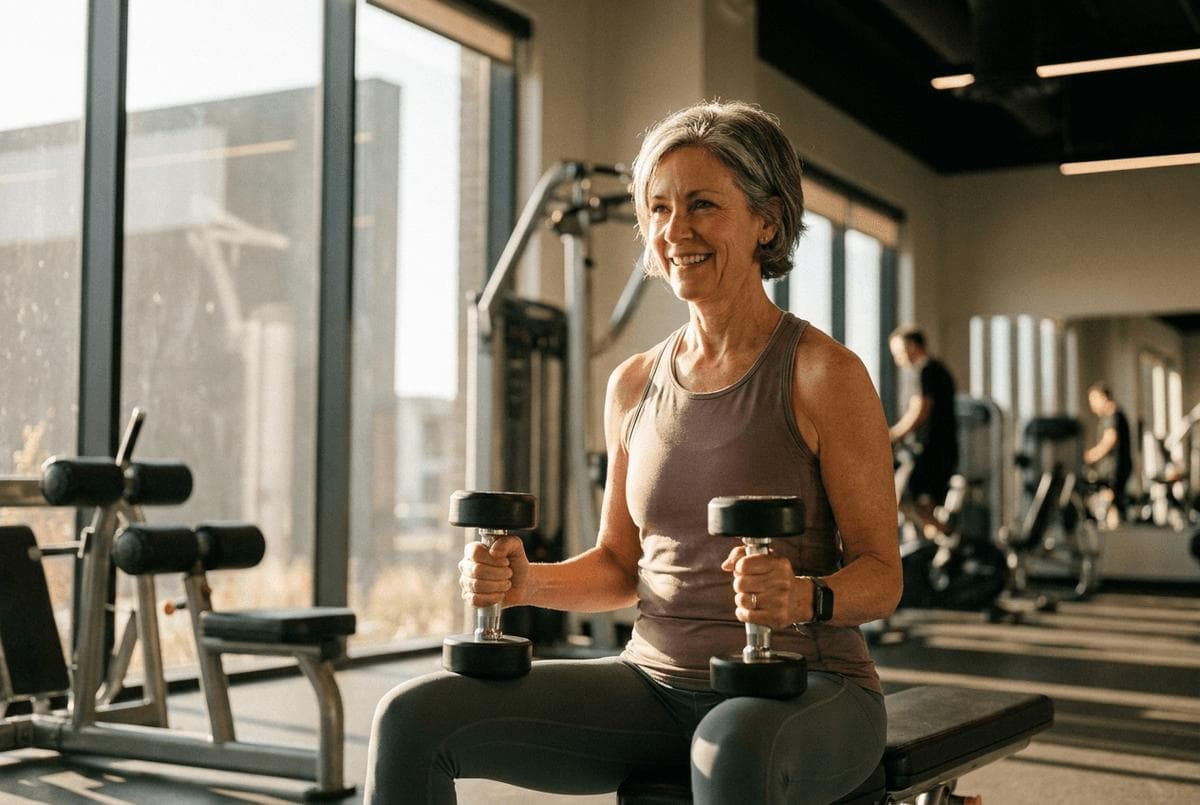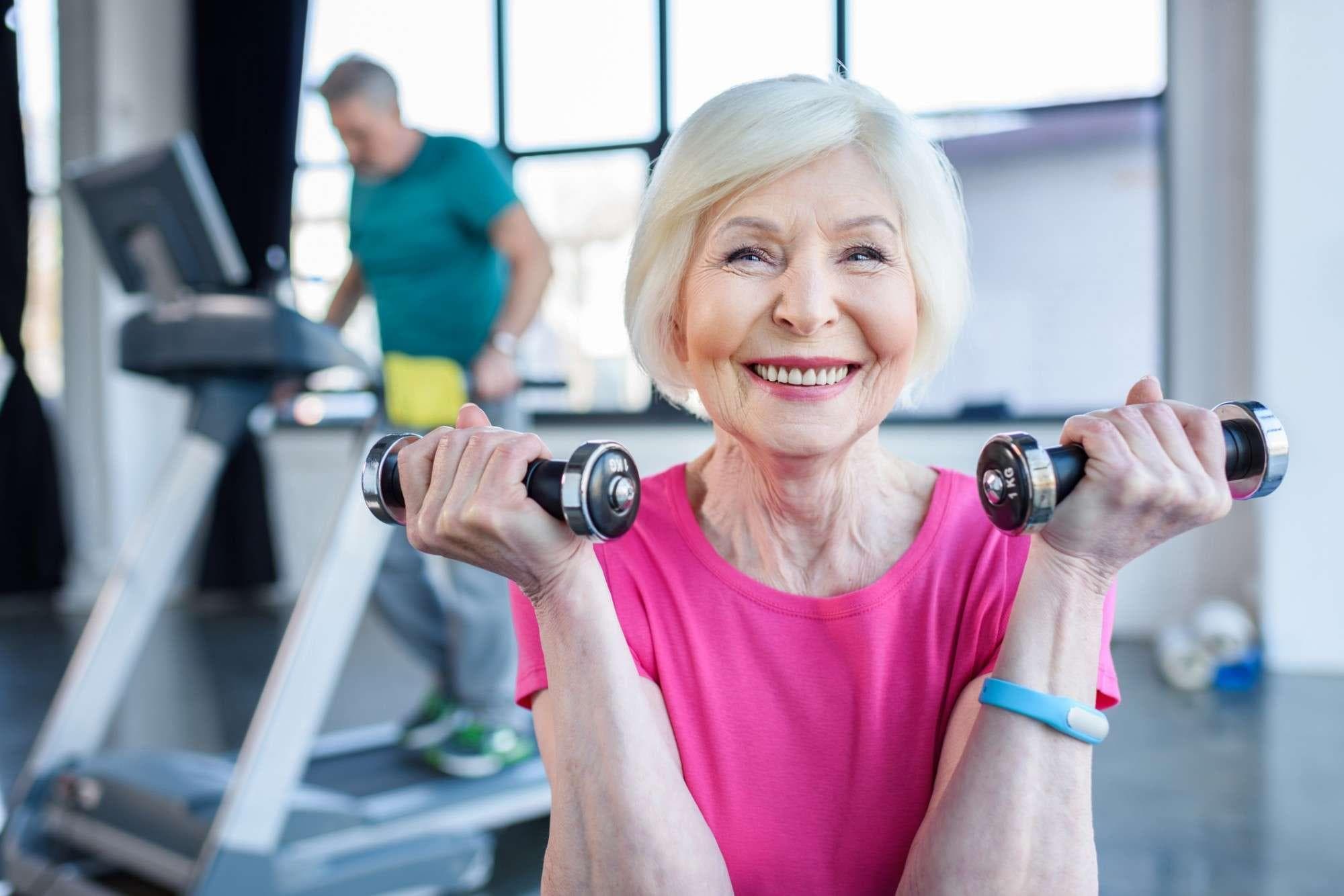
Strength training for women over 50 means regular exercise against resistance, using machines, dumbbells, bands or body weight, on two or more days a week. It helps maintain muscle and bone, which both decline with age and through menopause, and supports energy, posture and everyday independence. Start with light weights and a few key movements, focus on good technique, and increase the load gradually as you get stronger.
Why strength training for women over 50 matters
Plenty of women reach their fifties having done lots of walking, yoga or swimming but never much lifting. That's completely normal, and it's also why strength training for women over 50 can make such a difference. It works on the things other activities don't load as heavily: your muscles and your bones.
Both muscle and bone gradually decline with age, and the hormonal changes around menopause can speed that up. Lifting weights regularly is one of the most practical ways to hold on to strength, so carrying the groceries, lifting grandchildren and getting up off the floor stay easy.
Many women also find it does good things for how they feel. Getting stronger week by week is a satisfying, measurable kind of progress, and it often brings a sense of confidence that carries into other parts of life.
Menopause and strength training
Menopause brings changes that can affect energy, sleep, joints and body composition. Strength training won't fix everything, but it is widely recommended as part of looking after yourself through this stage, alongside good sleep, nourishing food and staying active.
Some days you'll feel strong and others you'll feel flat. That's fine. On low days, do a lighter session or fewer sets rather than skipping altogether. Keeping the habit going matters more than any single workout.
If you have osteoporosis, a heart condition, pelvic floor concerns, a joint replacement or any other health issue, check with your GP or physio before starting. A women's health physio can be particularly helpful for pelvic floor questions related to lifting.
A simple starter routine
Two sessions a week of the following will work every major muscle group. Do one to two sets of ten to twelve repetitions, with a weight that feels moderately challenging by the end of each set.
- Goblet squat to a box: hold a light dumbbell at your chest and sit back to touch a bench, then stand. Progress by holding a heavier dumbbell.
- Leg press: feet hip width on the platform, lower with control until your knees are comfortably bent, then press away. Add weight in small steps.
- Lat pulldown: pull the bar down towards your upper chest, elbows heading towards your ribs. Keep your shoulders away from your ears.
- Dumbbell chest press: lie on a flat bench and press two light dumbbells up over your chest, lowering slowly.
- Hip bridge: lie on your back with knees bent, squeeze your glutes and lift your hips, then lower. Progress by placing a dumbbell across your hips.
- Suitcase carry: hold one dumbbell at your side and walk tall without leaning. Swap sides. It builds trunk strength for real life carrying.
How to keep progressing
When you can comfortably finish all your repetitions with good form for a couple of sessions in a row, it's time to nudge things up. Add a little weight, or add a set. Small, steady increases are how strength is built.
Many women start with weights that are too light and stay there for too long. It's safe to work hard, as long as your technique stays controlled. The last couple of repetitions in a set should take real effort.
Keep a simple log of what you lifted each session. It helps you know when to progress, and looking back after a few months is a great reminder of how far you've come.
Begin each session with five minutes of easy movement, like walking or a few lighter warm-up sets, so your joints feel ready. On the days between strength sessions, keep moving with walks, swimming or gardening. Strength training works best as one part of an active week, not the whole of it.
Feeling at home in the gym
Walking into a weights area for the first time can feel intimidating, especially if you've never lifted before. You don't need to know everything on day one. Start with a handful of machines and one or two dumbbell exercises, and add more once you feel settled.
At Foundation, every new member has an induction where you're shown how to set up and use the equipment. With 24/7 access, you can choose quieter times if you'd like a bit of space while you learn. Go at your own pace and remember that everyone in the room started as a beginner.
Key takeaways
- Strength training for women over 50 helps hold on to muscle and bone, which both decline with age and through menopause.
- Two sessions a week covering the main movements is a solid foundation.
- Work hard enough that the last few repetitions take effort, while keeping your form controlled.
- Check with your GP or physio first if you have osteoporosis, pelvic floor concerns or another health condition.
General information only, not medical advice. If you have a health condition, injury or joint replacement, check with your GP or physio before starting something new.