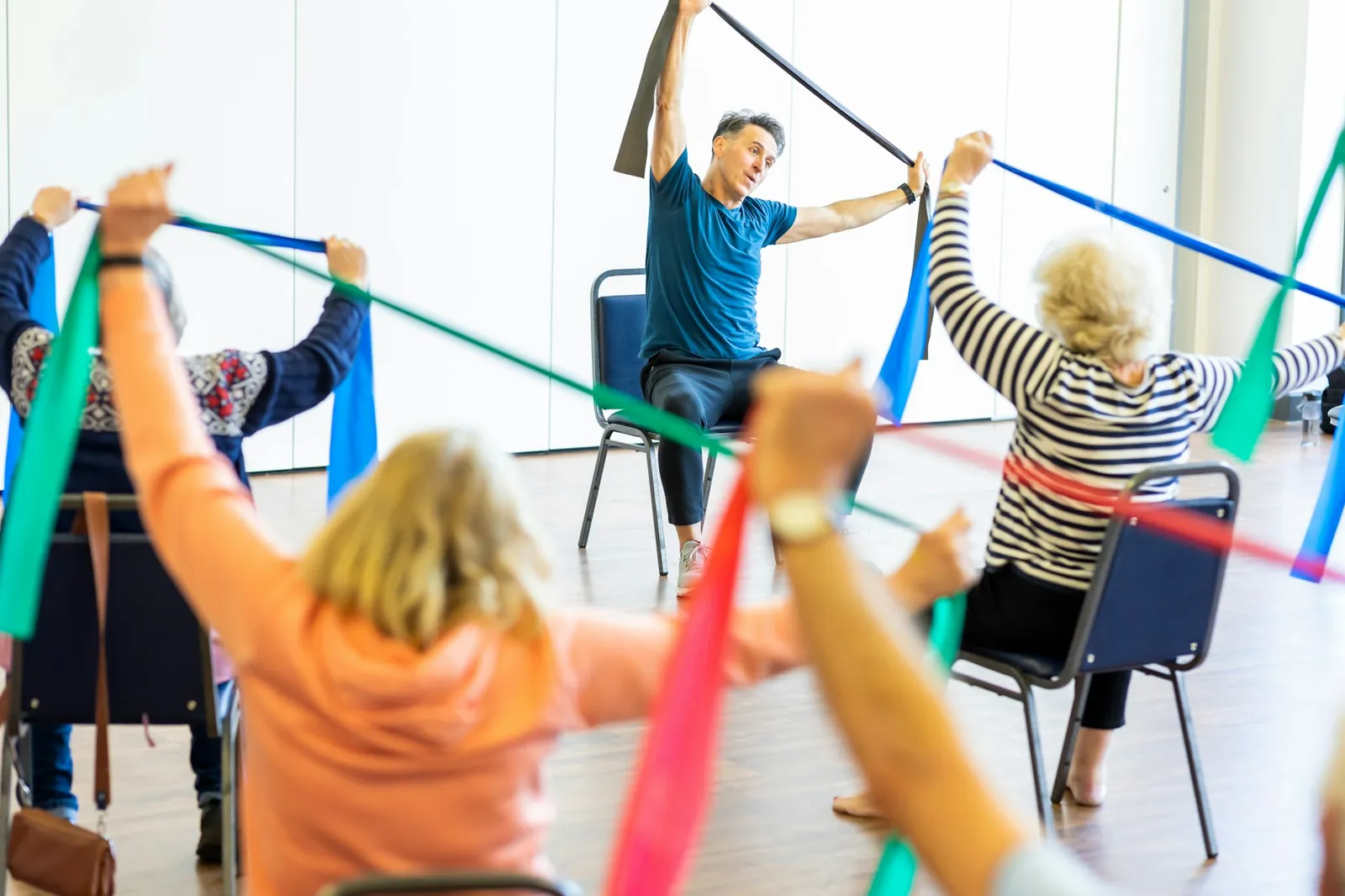
Chair exercises for seniors are simple strength and mobility movements done seated, or with a sturdy chair for support, such as seated marching, knee extensions, arm raises and sit to stand. They suit people who are just getting started, recovering from illness or with limited balance. A short seated routine a few times a week can loosen stiff joints and build strength, and it works best as a first step toward standing exercise.
Who chair exercises for seniors suit
Chair exercises are a friendly way in. A chair takes away the worry about losing your footing, so you can focus on moving well.
Seated exercises for seniors are a good fit if you're getting started after a long break, recovering from an illness or an operation (once your doctor has cleared you), living with limited balance, or managing sore knees and hips that make long periods of standing uncomfortable. They're also handy as a warm up before a walk or a gym session.
Chair exercises for seniors over 70, and well beyond, are just as useful. Age matters less than where you're starting from.
Staying safe with seated exercise
The chair matters. Choose a sturdy, solid chair without wheels, ideally without arms so your elbows have room to move. Push the back of it against a wall so it can't slide. Sit towards the front of the seat with your feet flat on the floor, about hip width apart, and your knees roughly over your ankles.
Move slowly and breathe normally. Some effort and mild muscle tiredness is fine, but stop if you feel pain, dizziness, chest discomfort or unusual shortness of breath.
This is general information, not medical advice. If you have a heart or lung condition, high blood pressure, osteoporosis, a joint replacement or have had recent surgery, check with your GP or physio before you start.
A 15 minute chair exercise routine
Work through these in order, resting as you need. If the repetitions feel like too many, do fewer and build up over the coming weeks. Gentle chair exercises for seniors should leave you feeling warm and a little worked, not wiped out.
- Warm up marching: sitting tall, lift your knees alternately in an easy march for one to two minutes, swinging your arms gently.
- Ankle circles: lift one foot slightly and draw slow circles with your toes, ten each way, then swap feet.
- Seated knee extensions: straighten one leg out in front until it's level or as high as is comfortable, pause, then lower slowly. Eight to twelve on each leg.
- Seated marching: march again, this time lifting your knees a little higher and more slowly, for about a minute.
- Shoulder rolls: roll your shoulders up, back and down in slow circles, ten times, then ten the other way.
- Arm raises: with your palms facing in, raise your arms out to the sides or forwards to shoulder height, then lower with control. Ten to twelve. Hold a water bottle or light dumbbell in each hand when that feels easy.
- Seated row with a band: loop a resistance band around your feet, hold an end in each hand and draw your elbows back, squeezing your shoulder blades together. Ten to twelve.
- Torso turns: cross your arms over your chest and turn slowly to one side, then the other, keeping your hips still. Eight each way.
- Sit to stand: with arms crossed or hands on your thighs, lean forward and stand up, then sit back down slowly. Five to ten. Use your hands to push off the chair if you need to.
- Neck stretch: tilt your ear gently towards one shoulder and hold for 15 to 20 seconds, then swap sides.
- Calf stretch: straighten one leg with your heel on the floor and gently draw your toes back towards you. Hold for 15 to 20 seconds on each leg.
How to progress, and why the chair is a starting point
Once the routine feels comfortable, make it a little harder, one change at a time. Add a few more repetitions, use a firmer resistance band, swap the water bottles for light dumbbells, or slow each movement down so your muscles work for longer.
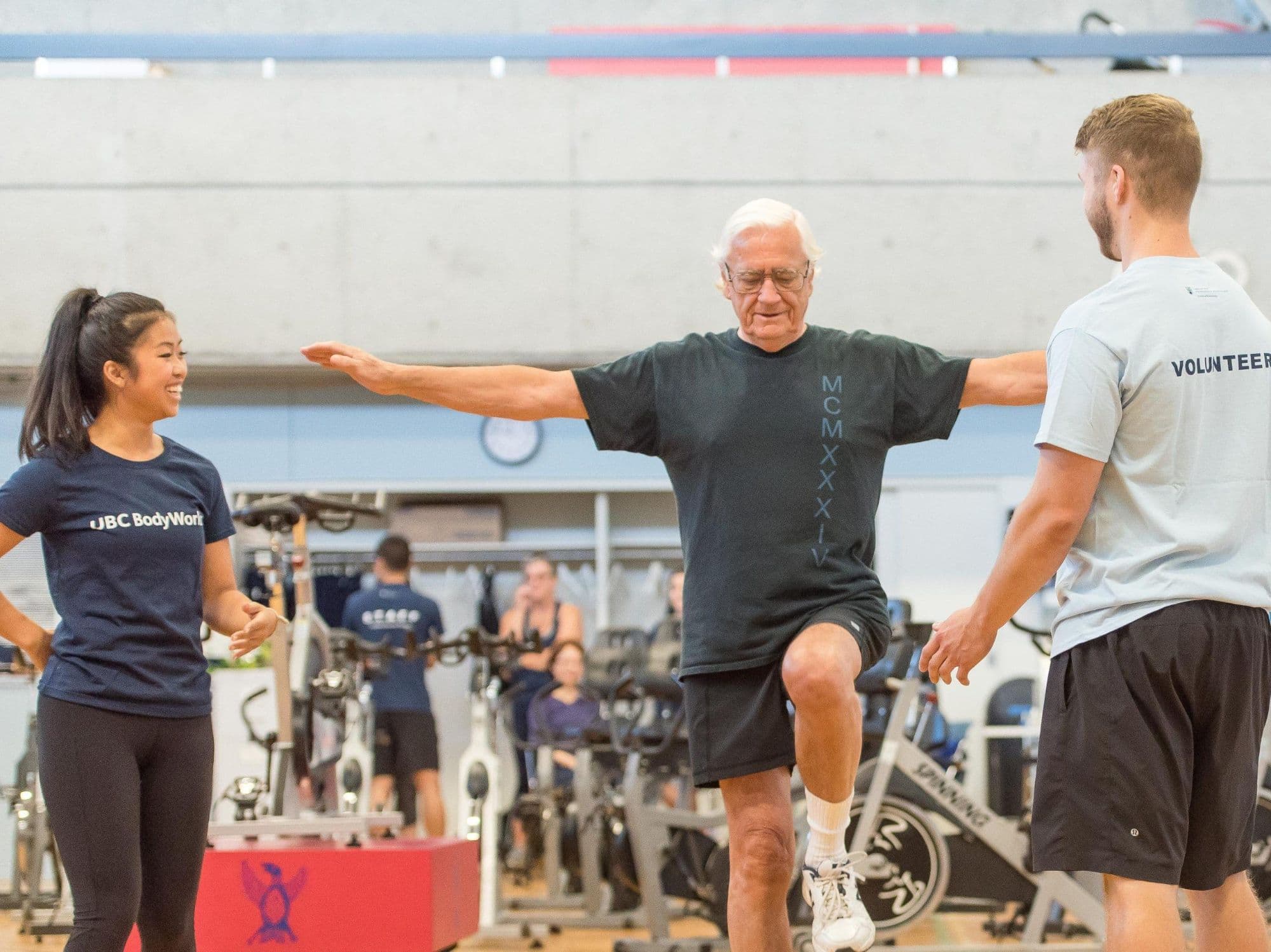
Sit to stand is the bridge from the chair to standing exercise. When you can rise and sit smoothly ten times without using your hands, you're ready to try some standing versions: calf raises and side steps holding the chair back, mini squats in front of the chair, and the balance moves in our balance exercises guide.
Chair work is a great starting point, but it isn't the finish line. Everyday life happens on your feet: carrying shopping, getting up off the floor, walking on uneven ground. Strength and balance trained standing up carry over most directly to those tasks. Use the chair to build the confidence and strength to move beyond it, and keep it handy for days when you need something gentler.
You may have come across chair tai chi, which uses slow, flowing seated movements. If you enjoy it, it can sit happily alongside this routine.
How Foundation can help you take the next step
When you're ready to build on what you've started at home, Foundation starts where you are. Every membership includes a getting started induction: a short health questionnaire so we know about any injuries or conditions, a walk-through of the gym, how to set up each machine safely and a simple starting plan built around your goals.
Two of our classes are a natural next step from chair exercise. Foundation Mobility is a whole-body mobility and stretching class that takes your joints gently through a comfortable range of movement. Foundations of Strength is for anyone new to strength training or coming back after a long break, where you learn the basic movements step by step and build up gradually. We don't run a dedicated chair class, but both are a gentle place to start.
With 24/7 access, you can also come in at quiet times and work through your own routine at your own pace.
Key takeaways
- Chair exercises for seniors are a safe, simple way to start building strength and mobility.
- Use a sturdy chair without wheels, pushed against a wall, with your feet flat on the floor.
- A 15 minute seated routine a few times a week is a realistic, worthwhile goal.
- Progress with more repetitions, bands, light weights and slower movements, then move to standing versions.
- Check with your GP or physio first if you have a health condition or have had recent surgery.
Try it in a class
Classes that cover this
- Foundation Mobility A whole-body mobility and stretching class that takes your joints gently through a comfortable range of movement. A good way to loosen up and get ready for the day.
- Foundations of Strength For anyone new to strength training, or coming back after a long break. You'll learn the basic movements step by step and build up gradually, so you can handle weights safely and with confidence.
General information only, not medical advice. If you have a health condition, injury or joint replacement, check with your GP or physio before starting something new.